Queenstown Airport International Terminal
Southern Lakes Commercial
Through the full engagement of the project team, from the client, consultants to contractors, our team delivered the desired result on time, and to budget, with minimal impact of defects given the fast-track nature of the project.
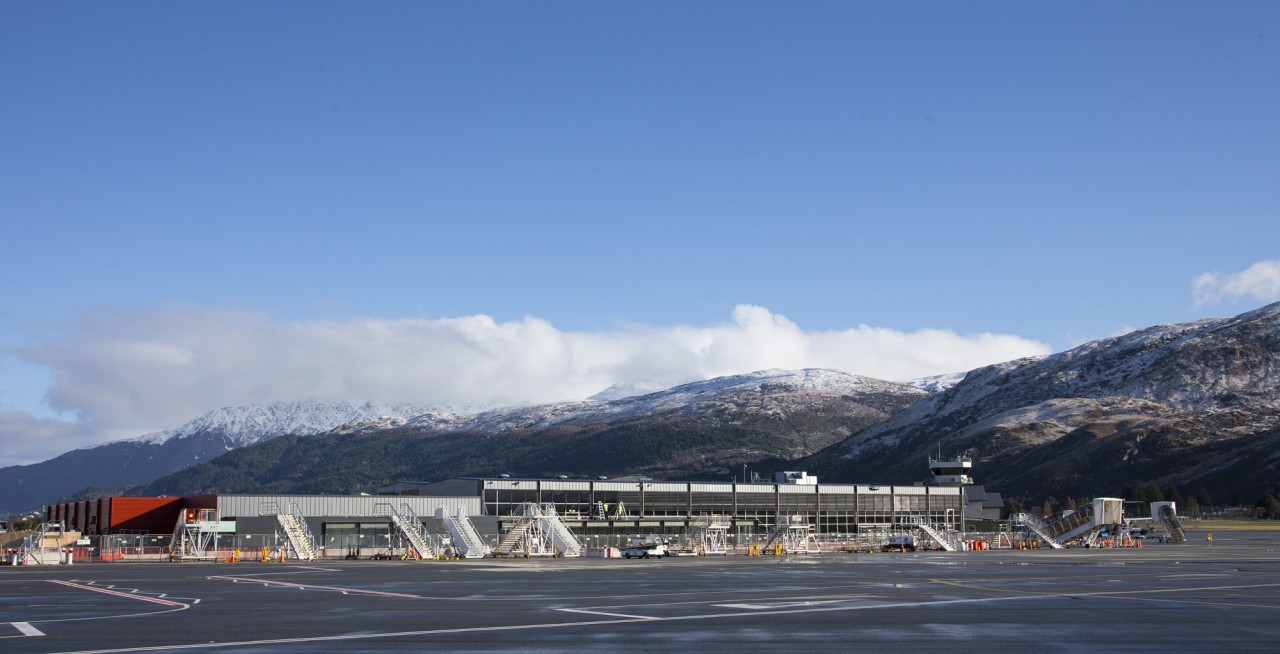
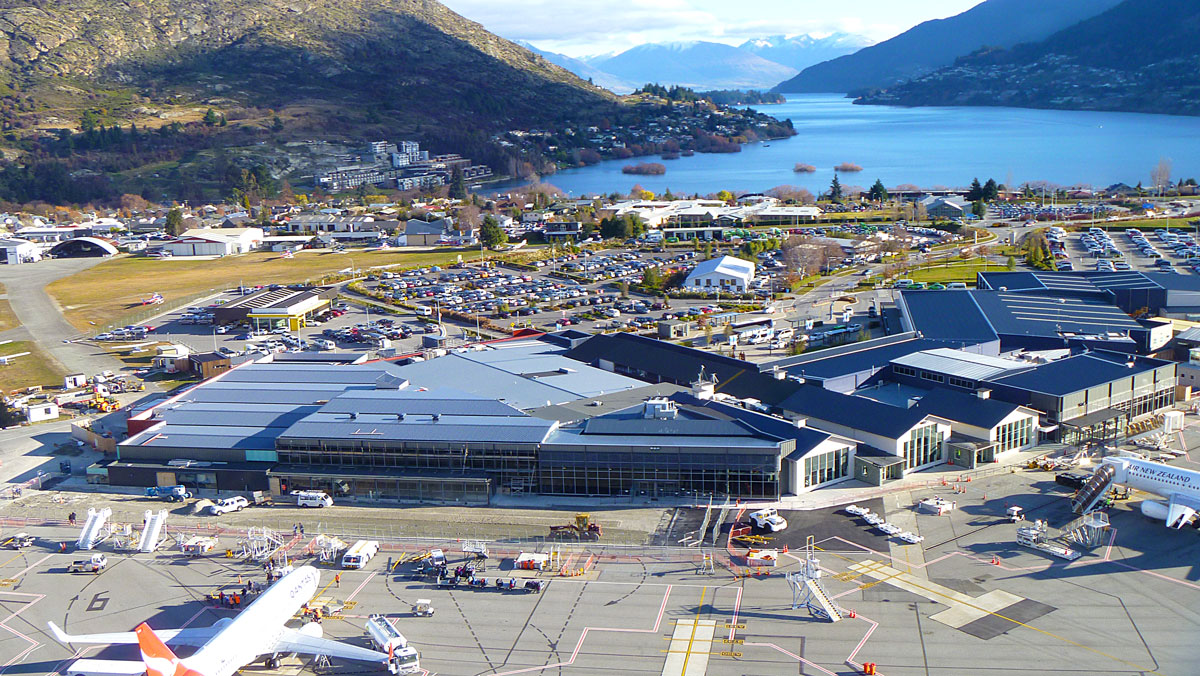
The commissioning of a new extension and seamless integration of existing facilities was required for the $12m Queenstown Airport International Terminal Extension 2015 project, in order to cater for increased international flights to the region. RCP was appointed as Project Managers for the project and Cook Brothers Construction appointed as the Main Contractor for this major building extension, which was designed by CCM Architects with the help of Holmes Consulting, Cosgroves and RLB, with a vision to add much-needed capacity to the wider terminal.
In time for the 2015 ski season.
RCP managed the design and consultant team. This process was fast-tracked due to the short programme. Soon after the design team was assembled, Cook Brothers Construction was engaged on a P&G and Margin bid so preparation and planning could begin to avoid any delays once full construction documentation was available. Construction of the new international terminal at Queenstown Airport had to be and was completed in time for the 2015 ski season. This collaborative approach allowed Cook Brothers Construction to extend the existing terminal by 30% in only 8 short months. Coupled with the design stage, the project duration was only 13 months, a credit to all involved. The construction team worked two shifts night and day to bring the terminal to life. It was an incredibly fast-paced project with no allowance for time extension due to the increase in arrivals once the ski season kicked off. In the height of construction, there were up to 250 contractors on site.
Queenstown’s commercial construction sector experienced a boom during the construction of the terminal, effecting resourcing around the district across all trades. This was recognised by RCP, who along with Cook Brothers Construction worked hard to make the Airport site first choice site for subcontractors to come to via regular celebrations and our collaborative planning approach.
The weather was also a challenge, we experienced high temperatures in the summer to freezing in the winter, at times with 15cm of snow on the ground.
Double in size
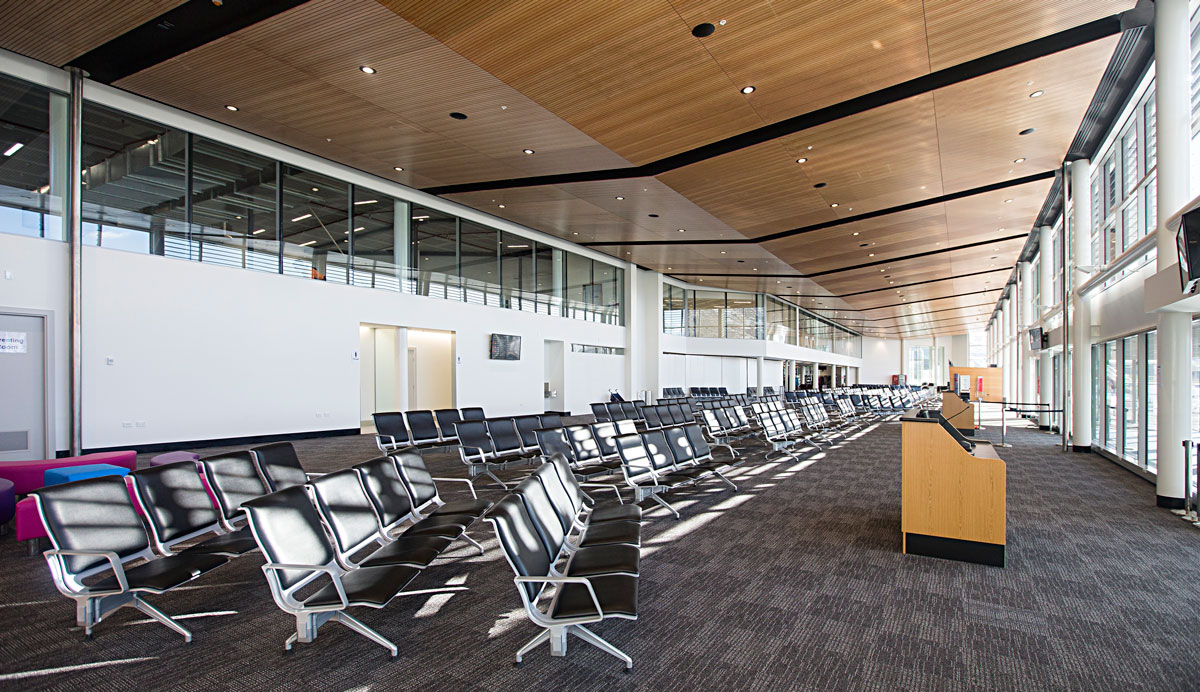
Driven by large year-on-year international passenger growth, the 4,080 m² additions to the southern end of the terminal almost doubled the size of the airport’s international operations. These changes allow the airport to process up to 1,000 passengers per hour, compared to the previous limit of only 480. The terminal can now better cater for existing passenger volumes and accommodate future growth.
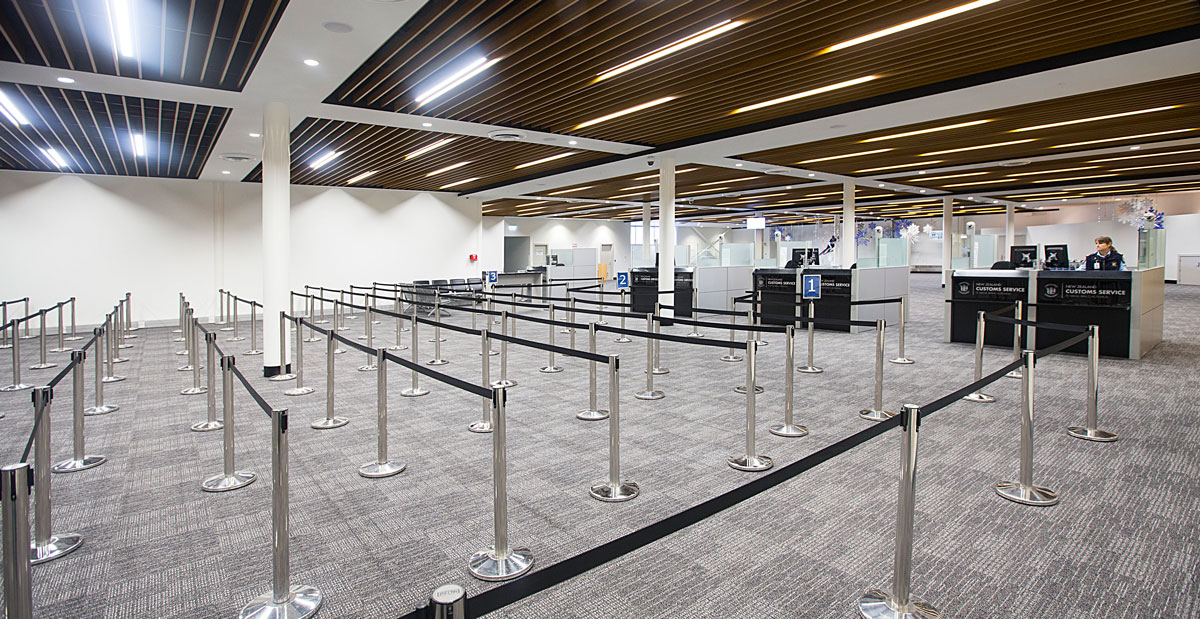
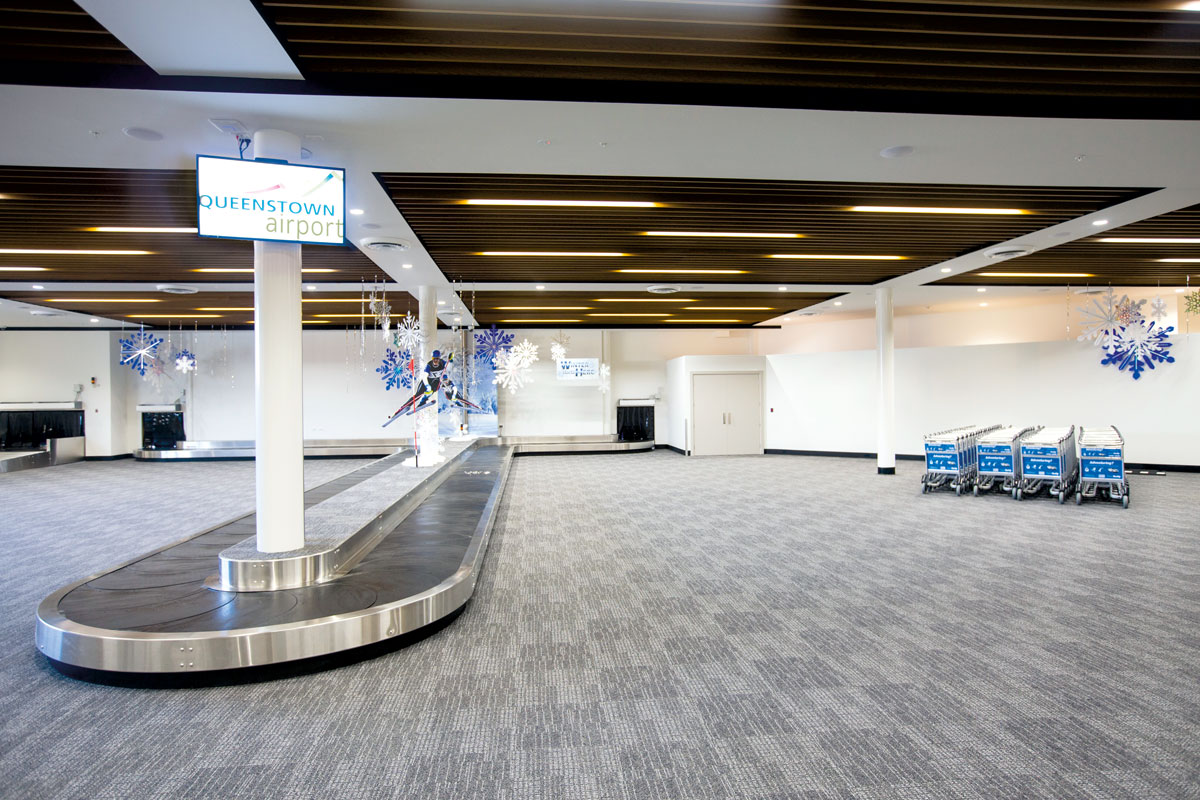
The extension houses a new international arrival and departure lounges, new customs area, baggage claim and handling areas, covered walkway, Duty-Free section, a retail area, cafes and office space. The extension provides a quality enhancement to the already celebrated and internationally recognised Queenstown Airport, offering a development meeting international standards and exceeding expectations while maintaining seamless integration with the existing facility to maintain the unique identity that the airport is renowned for.
Working in a high-security area
The Airport remained open during construction of the terminal extension. Great care was put into completing the project without impact on the usual operation of the facility. The consequences of interrupting a flight were too severe to even consider, so this was extremely high on our risk register.
A full-time H&S coordinator managed the workforce’s safety on site incorporating the tight security measures of a fully operational international airport. A bridge was used to pass from landside to the site, which was fully hoarded to make the site airside as well, thus negating the challenges that come with airside work.